


WestJet: The Canadian Balance Between Efficiency, Warmth, and Global Ambition
Calgary as the Starting Point
Within the Canadian aviation ecosystem, Calgary International Airport (YYC) holds a strategic position. Not only is it a key gateway to western Canada, but it also serves as the operational heart of WestJet, the airline that, in just over two decades, evolved from a regional low-cost carrier into a hybrid operator with global ambitions.
Founded in 1996, WestJet emerged as an efficient and approachable alternative to the country’s major legacy carriers. Today, the airline still preserves that original DNA, but with an operational maturity that becomes evident from the very first passenger touchpoint.
The check-in process at YYC is smooth, clearly organized, and highly digitalized. WestJet has invested heavily in automation, offering multiple self-service kiosks, seamless mobile app integration, and efficient checked baggage flow. For the business traveler, the real value lies in predictability: manageable lines, accessible staff, and straightforward processes.
Security and boarding follow the typical Canadian standard: organized, professional, and free from unnecessary friction. WestJet’s staff stands out for its approachable and friendly demeanor—less rigid than some traditional airlines, yet without sacrificing professionalism. That balance has become one of the airline’s defining characteristics.
The Airline: From Low-Cost Carrier to Hybrid Operator
WestJet has evolved into a well-defined hybrid airline model. While maintaining cost efficiency in its domestic and regional operations, the carrier also delivers a differentiated product on transcontinental and international routes.
Its strategy relies on a modern and streamlined fleet composed primarily of:
- Boeing 737 Next Generation and Boeing 737 MAX aircraft for domestic and regional operations
- Boeing 787-9 Dreamliner aircraft for long-haul services to Europe, Asia, and selected U.S. destinations
This dual-fleet strategy allows WestJet to compete both on frequency and cost efficiency within Canada, while simultaneously offering a more premium experience on international routes. In this report, however, we focus specifically on the onboard experience of the airline’s Boeing 737 fleet.
Economy Cabin: Well-Executed Functionality
In Economy Class, WestJet delivers a solid and thoughtfully designed experience. The seats are comfortable for the segment, well-maintained, and supported by an overall sense of cleanliness and order throughout the cabin. The onboard entertainment platform, accessible through personal electronic devices, meets expectations for medium-haul travel.
The inflight service is efficient and cordial. It is not extravagant, but it consistently delivers professionalism and reliability. On domestic and regional flights, the value proposition is clear: punctuality, reasonable comfort, and a product aligned with the expectations of the modern Canadian traveler.
The Backbone of WestJet: The Boeing 737 Family
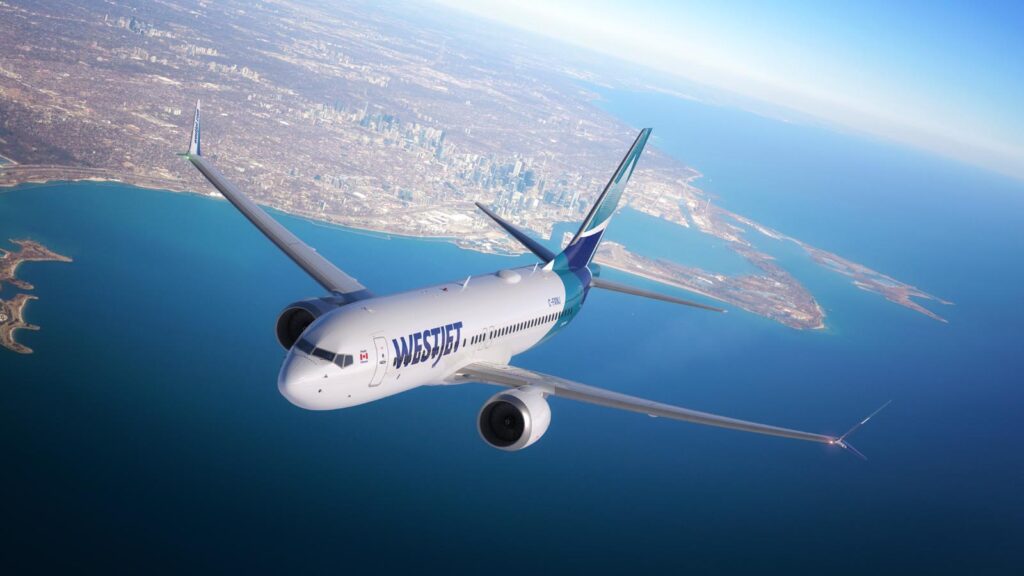
Although WestJet has incorporated the Boeing 787 Dreamliner into its international operations, the true operational backbone of the airline remains the Boeing 737 family. Since its earliest days, the 737 has been the aircraft that shaped the airline’s growth and identity.
Today, the fleet includes both Boeing 737 Next Generation and Boeing 737 MAX variants, operating domestic Canadian routes, transborder services to the United States, and leisure-focused flights to the Caribbean and Mexico.
The Boeing 737 MAX represents a significant evolution for WestJet. The aircraft provides improved fuel efficiency, lower emissions, and quieter cabin environment—elements that positively impact both operational performance and passenger comfort.
Onboard, the cabin design maintains WestJet’s characteristic practical and functional approach. The interior configuration balances capacity and comfort without excess, reinforcing the airline’s hybrid positioning between low-cost efficiency and legacy-carrier standards.
Fleet, Culture, and Positioning
Beyond the hardware itself, WestJet has successfully built a recognizable corporate culture. Its human-centered approach, approachable crews, and less rigid communication style create a positive perception among frequent travelers.
From Calgary, the airline projects a clear identity: Canadian, efficient, and ambitious—without losing its original essence.
Conclusion: An Airline That Understands Its Passenger
WestJet does not attempt to be everything to everyone. Its success lies in understanding its target passenger and delivering exactly what it promises. For the business traveler, that translates into:
- Efficient processes
- A consistent product
- A modern fleet
- Reliable service
From Calgary, WestJet demonstrates that it is possible to grow, modernize, and compete globally without losing identity. In a market increasingly polarized between ultra-low-cost carriers and traditional legacy airlines, WestJet has carved out a space of its own—and it occupies it with confidence.
Por: Santiago Echeverri
Diseñado y digramado por www.clovergraf.com todos los derechos reservados

